Wednesday, February 29, 2012

Warren Buffett: It’s Time to Buy Real Estate

by The KCM Crew

Warren Buffett appeared live on CNBC’s Squawk Box this week. During the interview, he was asked about the current real estate market and whether he felt now was the time to buy. His response was rather emphatic and has been used as a headline in hundreds of articles since the interview:

“If I had a way of buying a couple hundred thousand single-family homes I would load up on them.”

However, throughout the interview, he addressed the market from a few angles. Here is what he said:

Why invest in real estate now?

“It’s a way, in effect, to short the dollar because you can take a 30-year mortgage and if it turns out your interest rate’s too high, next week you refinance lower. And if it turns out it’s too low, the other guy’s stuck with it for 30 years. So it’s a very attractive asset class now.”

Is buying your own home better than investing in stocks right now?

“If I knew where I was going to want to live the next five or 10 years I would buy a home and I’d finance it with a 30-year mortgage… It’s a terrific deal.”

Should we buy multiple houses?

“If I was an investor that was a handy type and I could buy a couple of them at distressed prices and find renters, I think it’s a leveraged way of owning a very cheap asset now and I think that’s probably as an attractive an investment as you can make now.”

Over the last couple of months, there have been more and more financial analysts coming to the same conclusion: It’s time to buy real estate.

If you are considering Relocating to Colorado Springs, Purchasing a Home for Sale in Colorado Springs, considering Selling a Home in Colorado Springs, or want more information on the Colorado Springs Real Estate Market, Contact your Colorado Springs Real Estate Expert, Mike MacGuire Today! Click Here to Check out my informational video if you are considering Selling a Home in Colorado Springs. Click Here to Check out my informational video if you are considering Purchasing a Home for Sale in Colorado Springs.

Monday, February 27, 2012

Foreclosures in Process by State


Methodology as per CoreLogic: The foreclosure inventory represents the number and ratio of homes that have been placed into the process of foreclosure by the mortgage servicer. Mortgage servicers start the foreclosure process when the mortgage reaches a specific level of serious delinquency as dictated by the investor for the mortgage loan … The foreclosure inventory is measured only against homes that have an outstanding mortgage. Homes with no mortgage liens can never be in foreclosure and are therefore excluded from the analysis.

If you are considering Relocating to Colorado Springs, Purchasing a Home for Sale in Colorado Springs, considering Selling a Home in Colorado Springs, or want more information on the Colorado Springs Real Estate Market, Contact your Colorado Springs Real Estate Expert, Mike MacGuire Today! Click Here to Check out my informational video if you are considering Selling a Home in Colorado Springs. Click Here to Check out my informational video if you are considering Purchasing a Home for Sale in Colorado Springs.

Friday, February 24, 2012

Existing-home sales post third gain in 4 months!

By Inman News

Increased demand from investors and first-time homebuyers helped boost existing-home sales in January -- the third increase in the past four months, the National Association of Realtors reported.

NAR said total existing-home sales -- including single-family homes, townhomes, condominiums and co-ops -- were up 4.3 percent from December to January, to a seasonally adjusted annual rate of 4.57 million.

While that's essentially unchanged from the same time a year ago, for-sale inventory was down 20.6 percent from a year ago, to 2.31 million homes, a 6.1-month supply of homes at the current pace of sales.

Many housing analysts view a six-month inventory of homes as a good balance between supply and demand -- a larger inventory of homes can indicate an oversupply of homes for sale, which can undermine prices. When inventories drop below six months, the shortage of homes for sale can drive up prices.

"The broad inventory condition can be described as moving into a rough balance, not favoring buyers or sellers," NAR Chief Economist Lawrence Yun said in a statement.

Yun cited the statistics as evidence that a government proposal to convert bank-owned properties into rentals on a large scale "does not appear to be needed at this time."

"Foreclosure sales are moving swiftly with ready homebuyers and investors competing in nearly all markets," he said.

Merrill Lynch analysts Michelle Meyer and Ethan Harris think part of the drop in inventory is due to delays in the foreclosure process in the aftermath of the so-called "robo-signing" scandal.

With top banks nearing a final settlement with state attorneys general, they expect the foreclosure process to accelerate, and for inventory to swell to eight months later this year.

The first REO-to-rental transactions are weeks away, but the property pools offered this year may be smaller and more manageable for groups of qualified local investors than previously assumed, Ken Harney reports.

NAR said foreclosures and short sales accounted for 35 percent of sales in January, and that the national median existing-home price for all housing types was down 2 percent from a year ago, to $154,700.

Investors purchased 23 percent of homes in January, up from 21 percent in December, while the percentage of first-time homebuyers increased from 31 percent in December to 33 percent in January.

Nearly one in every three January home sales was an all-cash transaction. A survey of NAR members showed more than half had at least one contract canceled or delayed in January, often as a result of a mortgage application being turned down or because appraisals come in below the negotiated price.

Single-family home sales were up 3.8 percent from December to January, to a seasonally adjusted annual rate of 4.05 million. That's a 2.3 percent increase from a year ago. The median existing single-family home price was $154,400 in January, down 2.6 percent from the same time a year ago.

Existing condominium and co-op sales increased 8.3 percent from December to January, to a seasonally adjusted annual rate of 520,000. That's a 10.3 percent decline from a year ago. The median existing condo price was $156,600 in January, up 2 percent from January 2011.

At the regional level, the West saw the biggest jump in sales, an 8.8 percent increase from December to January. Sales were down 3.1 percent from a year ago, however, and the median price was also down 1.8 percent from January 2011, to $187,100.

The Midwest saw the smallest jump in sales, with sales up 1 percent from December to January. Although that was a 3.2 percent increase from a year ago, the median home price fell 3.9 percent from January 2011, to $122,000.

In the South, existing-home sales rose 3.5 percent from December to January but were unchanged from a year ago. The median price in the South was $134,800, down 0.3 percent from a year ago.

Existing home sales were up 3.4 percent from December to January in the Northeast, and up 7.1 percent from a year ago. At $225,700, the median price in the Northeast dropped 4.2 percent from January 2011.

If you are considering Relocating to Colorado Springs, Purchasing a Home for Sale in Colorado Springs, considering Selling a Home in Colorado Springs, or want more information on the Colorado Springs Real Estate Market, Contact your Colorado Springs Real Estate Expert, Mike MacGuire Today! Click Here to Check out my informational video if you are considering Selling a Home in Colorado Springs. Click Here to Check out my informational video if you are considering Purchasing a Home for Sale in Colorado Springs.

Thursday, February 23, 2012

Is There a 3.8% House Sales Tax in the Health Care Bill?

by The KCM Crew

The presidential election has renewed the debate about the Administration’s Health Care Bill. We are again getting many questions about a possible 3.8% tax on home sales that some claim is in the bill. To answer these questions, we have decided to re-run a blog post we did last year. – The KCM Crew

We have received many questions about a possible 3.8% tax which will be put on home sales beginning in 2013. We want to do our best to clarify this situation for everyone. We are not accountants and give you this information just as a simple answer to the misconception. Understand that, when it comes to IRS regulations, you should check with your accountant for the most accurate and up-to-date information.

A little history on the confusion

Fact Check.org explains it this way:

The truth is that only a tiny percentage of home sellers will pay the tax. First of all, only those with incomes over $200,000 a year ($250,000 for married couples filing jointly) will be subject to it. And even for those who have such high incomes, the tax still won’t apply to the first $250,000 on profits from the sale of a personal residence — or to the first $500,000 in the case of a married couple selling their home.

We can understand how this misconception got started. The law itself is couched in highly technical language that only a qualified tax expert can fully grasp. (This provision begins on page 33 of the reconciliation bill that was passed and signed into law.) And it does say the tax falls on “net gain … attributable to the disposition of property.” That would include the sale of a home. But the bill also says the tax falls only on that portion of any gain that is “taken into account in computing taxable income” under the existing tax code. And the fact is, the first $250,000 in profit on the sale of a primary residence (or $500,000 in the case of a married couple) is excluded from taxable income already. (That exclusion doesn’t apply to vacation homes or rental properties.)

The Joint Committee on Taxation, the group of nonpartisan tax experts that Congress relies on to analyze tax proposals, underscores this in a footnote on page 135 of its report on the bill. The note states: “Gross income does not include … excluded gain from the sale of a principal residence.”

And just to be sure, we checked with William Ahern, director of policy and communications for the nonprofit, pro-business Tax Foundation. “Some home sales would see a tax increase under this bill,” Ahern told us, “but it would have to be a second home or a principal residence generating [a gain of] more than $250,000 ($500,000 for a couple).”


Simple Explanation:

The following simple explanation comes from midiShaw:

The tax will affect those sellers of real property who will be otherwise taxed on capital gains under current tax laws. Under current laws, if you sell your primary residence and meet the ‘time ‘ criteria, you are exempt up to $250,000 or $500,000 (filing individually or jointly). Any amount realized OVER that amount is taxable under current tax schedules based on income. As such, this new tax will apparently be added to the current capital gains tax burden IF your income is over $200,000/$250,000 (filing individually or jointly). For those selling second homes and investment properties, the tax, once again, will be applied to the amount of gain realized.

Detailed Explanation:

The following also comes from midiShaw in a comment to the above answer.

Beginning in 2013, the national health care reform legislation that became law in March, 2010, imposes a new 3.8 percent tax on certain investment income. The new tax will apply to single filers with incomes over $200,000 and married taxpayers with incomes over $250,000. Under the law, the investment tax provisions in Chapter 2A of the Internal Revenue Code are placed under the heading “Unearned Income Medicare Contribution.” In general, this new Medicare tax will apply to investment income that is subject to income tax, which includes capital gains. Pursuant to IRC Section 1402 (C)(1)(A)(iii), the investment income to which this new tax applies includes “net gain” (to the extent taken into account in computing taxable income) attributed to the disposition of property that qualifies as a capital asset under Section 1221 (capital gains), as well as gains on other property that are considered part of ordinary income.

We offer this just as an explanation. Remember, when it comes to IRS regulations, you should check with your accountant for the most accurate and up-to-date information.

If you are considering Relocating to Colorado Springs, Purchasing a Home for Sale in Colorado Springs, considering Selling a Home in Colorado Springs, or want more information on the Colorado Springs Real Estate Market, Contact your Colorado Springs Real Estate Expert, Mike MacGuire Today! Click Here to Check out my informational video if you are considering Selling a Home in Colorado Springs. Click Here to Check out my informational video if you are considering Purchasing a Home for Sale in Colorado Springs.

Wednesday, February 22, 2012

How the Serenity Prayer Applies To Selling a Home

by The KCM Crew

You may believe that selling your home is impossible in today’s market. You may feel powerless to the process. What could YOU possibly do to turn this housing market around? There is no doubt that today’s real estate market is extremely difficult to navigate. However, we want you to know that thousands of homes sold yesterday, thousands will sell today and thousands will sell each and every day from now until the end of the year.

It is totally within your power to guarantee that your house will sell even in the current market.

“How?”, you ask. Let’s look at the simplicity of the famous Serenity Prayer and apply it to selling a home in today’s real estate market.

“Grant me the serenity to accept the things I cannot change; courage to change the things I can; and wisdom to know the difference.”

Accept the things you cannot change

The two main reasons that the housing prices have softened:

1. the current economy
2. the inventory of distressed properties (foreclosures and short sales)

As an individual homeowner, there is no way for you to impact either of those two situations. The best think-tanks in the country are struggling to discover solutions.

Have the courage to change the things you can

There is not a vacuum of buyers in the market. There is a vacuum of homes a buyer in today’s market will purchase. Let us explain: could you sell your home today for $1? … $1,000 … $10,000? Of course you could. There are plenty of buyers in the market for a home they consider priced correctly. You have to decide what the correct price is for your home if you truly want to sell. If you want your house sold, you must list it at a price a buyer will pay for it. Not a buyer from 2006 but today’s buyer who has plenty of homes from which to choose.

It will take courage to sit with a real estate professional and honestly decipher the true value of your home. If you want to sell, you must have that courage.

The wisdom to know the difference

We all realize that the economic situation will take some time to correct. If we want to wait for prices to return to 2006 levels, we will probably have to wait for 5-7 years.

Look at the reason you decided to sell in the first place and decide whether the extra money you would get from the sale is worth that wait. Is money more important than being with family? Is money more important than your health? Is money more important than having the freedom to go on with your life the way you think you should?

This is where your wisdom must kick in. You already know the answers to the questions we just asked. You have the power to take back control of the situation by pricing your home to guarantee it sells. The time has come for you and your family to move on and start living the life you desire. That is what is truly important.

If you are considering Relocating to Colorado Springs, Purchasing a Home for Sale in Colorado Springs, considering Selling a Home in Colorado Springs, or want more information on the Colorado Springs Real Estate Market, Contact your Colorado Springs Real Estate Expert, Mike MacGuire Today! Click Here to Check out my informational video if you are considering Selling a Home in Colorado Springs. Click Here to Check out my informational video if you are considering Purchasing a Home for Sale in Colorado Springs.

Tuesday, February 21, 2012

Springs named second safest city in U.S.

COLORADO SPRINGS, COLO. -- Colorado Springs has been named the second safest city in America by InsuranceProviders.com.

The study took into account crime rates, probability of natural disasters and driving safety.

The main reason for the high ranking was the city's disaster ranking. Because it is up on the edge of the mountains, tornadoes are not common, and it is obviously not near a coast, so tropical storms are nonexistent.

Crime rates are lower than cities of comparable sizes, but officials with the study said crime rates ended up not being as big a factor in cities that ranked safe as it was in cities that ranked unsafe.

In terms of driving, Colorado Springs residents go an average of 11.9 years without getting into a crash.

Mesa, Ariz. was the only city listed as being safer than Colorado Springs. Aurora, Colo. also finished in the top 10, coming in at number nine.

To see the complete list, click here.

If you are considering Relocating to Colorado Springs, Purchasing a Home for Sale in Colorado Springs, considering Selling a Home in Colorado Springs, or want more information on the Colorado Springs Real Estate Market, Contact your Colorado Springs Real Estate Expert, Mike MacGuire Today! Click Here to Check out my informational video if you are considering Selling a Home in Colorado Springs. Click Here to Check out my informational video if you are considering Purchasing a Home for Sale in Colorado Springs.

Monday, February 20, 2012

20 Weekend Projects Under $20

These 20 improvements may not cost a lot, but they'll make a big difference in how your home functions. Complete one or more of these projects this weekend.

Add a Lower Bar

Adding a lower bar to a closet lets you hang tops above and bottoms below and can effectively double your closet space. You might need to move the existing rod up a bit to accommodate the new arrangement.


Increase Lighting

Install a fixture to shed additional light on a dim area. Think about dark closets or corners where you sit and read and decide if you need more illumination.


Update with Paint

Breathe new life into an old piece of furniture with a fresh coat of paint. For wood pieces, remove dirt or wax buildup with a household cleaner and rinse. Sand rough areas and wipe away dust. Apply two coats of stain-blocking primer and allow it to dry between coats. Roll or brush on two coats of latex paint in the direction of the wood grain, and use a brush to finish the surface with smooth strokes.


Tackle Trim Work

Replace mismatched, missing, or damaged moldings, end caps, baseboard, or quarter rounds. Curved areas may require a special piece or trim made of an alternate material.


Add a Divider

Drawer and cabinet dividers are a must when it comes to keeping pans, lids, spatulas, and chip clips in their respective places. Some units match your cabinetry for a completely integrated and customized look.


Improve Air Flow

Replace a standard floor grate with a more impressive -- and possibly more efficient -- wood or metal register grille. An inferior grate might not channel air in the best direction for optimum flow.


Transition Floors

Make sure you have the correct threshold strip at room entrances where flooring changes. Some moldings adjust to various floor heights and have hidden fasteners.


Recycle Aluminum Rods

Swap flimsy metal curtain rods for a hearty wooden dowel or a rich cast finial-and-ball unit. Match the rod to your wood trim or design elements such as your door hardware.


Replace Switchplates

Replace a plastic switchplate with a wood, metal, or ceramic cover. Some are even textured to blend in with marble, tile, or stone surfaces. Do this for light switches, electrical outlets, and phone and cable jacks.


Update with Hardware

Update your cabinetry by replacing the pulls and knobs on all your drawers and doors. They'll keep your cabinets free of messy fingerprints and add a finished look to your kitchen or bathroom.


Put Towels Within Reach

Don't walk across the room to grab a towel. Add towel bars where you need them, or move the bars you have to make them more accessible. Hunt for bars that complement existing hardware in your kitchen or bath.


Replace Window Shades

Have the window shades in your kitchen been marred by repeated exposure to splashes and cooking liquids? Replace stained window coverings and see your kitchen in a whole new light.


Add Extra Storage

Create a between-the-studs shelf or cubbyhole where you need a little extra storage, especially in a bathroom. Use the space as a magazine rack or to house towels.


Streamline Your Sink

Add an integrated soap or lotion dispenser to your kitchen or bathroom sink to eliminate the clutter of a freestanding bottle. Mount the unit on your existing faucet deck or sink following the directions that accompany the pump.


Get Filtered Water

With a few twists and turns of the spout, you can install a water-filtration system on your kitchen faucet. Most units include a means of bypassing when you need regular tap water for washing hands and dishes.


Organize Your Entryway

Hang a hook for each family member near the door where belongings get tossed upon entry. When coats and totes have a home, you'll feel super organized as you grab and go each day.


Add an Outdoor Path

Consider adding stepping-stones where people walk across the grass each day. It's a simple job, but it requires digging for the pavers, so make sure to have your utility lines marked first.


Install a Window Box

Dress up your windows with an herb or flower garden. Terra-cotta units are an affordable option or construct one from cedar planks. Attach your planter with brackets below a window.


Prep for Surround Sound

You might not be able to buy outdoor speakers for less than $20, but you can lay the groundwork. Consult a local electronics store to determine what wire and connectors you'll need to hook into your existing entertainment system.


Update Door Hardware

All it takes is a screwdriver and few minutes to change clashing or poorly operating door hardware.

If you are considering Relocating to Colorado Springs, Purchasing a Home for Sale in Colorado Springs, considering Selling a Home in Colorado Springs, or want more information on the Colorado Springs Real Estate Market, Contact your Colorado Springs Real Estate Expert, Mike MacGuire Today! Click Here to Check out my informational video if you are considering Selling a Home in Colorado Springs. Click Here to Check out my informational video if you are considering Purchasing a Home for Sale in Colorado Springs.

Read the full article here: http://www.bhg.com/home-improvement/remodeling/budget-remodels/weekend-projects-under-20-dollars/#page=1

Mortgage Settlement to Drive Increase in Foreclosures

by The KCM Crew

The National Mortgage Settlement gave banks a roadmap showing them how to proceed with the backlog of foreclosures (known as shadow inventory) that has been hanging over the housing market for more than a year. We believe that understanding this dynamic is crucial in determining home prices as we go through the year. We believe the number of houses sold will grow somewhat dramatically in 2012. However, the increase in demand will be offset by an increase in supply of distressed properties that sell at a discount.

Others also feel there will be an increase in foreclosures as we move through the year.

Calculated Risk

“It does appear the number of completed foreclosures will increase following this settlement – especially in some judicial states with large backlogs – so there will probably be more REOs (lender Real Estate Owned) for sale.”

Brandon Moore, chief executive of RealtyTrac

“The settlement sets forth clear guidelines for lenders and servicers to follow when foreclosing, which should allow them to push through some of the delayed foreclosures from last year.”

Susan Wachter, professor of real estate and finance, University of Pennsylvania’s Wharton School

“There remains a danger that ‘a wave of foreclosures’ may destabilize the housing market. The logjam has to be unleashed – [the settlement] will do that.”

Mark Zandi, chief economist Moody’s Analytics

“I think there’ll be more price weakness, because we’ll see the number of distressed sales pick up. But I think the price declines will be modest.”

What does ‘modest’ mean? Celia Chen, Moody’s Analytics suggests:

“The latest settlement will hasten the pace of filings and push up the distress sale share of total sales over the next several quarters, driving national house prices down another 3%.”

Bottom Line

The increase in supply will cause prices to soften even though we will see an increase in demand. Check with a real estate professional to help you understand how this will impact your local market.

If you are considering Relocating to Colorado Springs, Purchasing a Home for Sale in Colorado Springs, considering Selling a Home in Colorado Springs, or want more information on the Colorado Springs Real Estate Market, Contact your Colorado Springs Real Estate Expert, Mike MacGuire Today! Click Here to Check out my informational video if you are considering Selling a Home in Colorado Springs. Click Here to Check out my informational video if you are considering Purchasing a Home for Sale in Colorado Springs.

Thursday, February 16, 2012

Behind the Numbers: Builder Confidence Climbs

By Dawn Wotapka

A closely watched confidence index came in at the highest level in nearly five years, a sign of improvement for an industry trying to climb out of a deep slump.

The National Association of Home Builders said Wednesday its housing market index climbed to 29 from 25 in January. The increase, the fifth in a row, lifted the index to its highest since May 2007. Economists polled by Dow Jones Newswires had forecast a reading of 26.

All three components of the builders’ index increased. Builders’ assessment of traffic from potential buyers, current sales conditions and expectations for sales over the next six months all reached the highest point since mid-2007.

To be sure, the reading remains low. A number above 50 in the NAHB index would show more builders view conditions as good rather than poor. And keep in mind that the reading remains well below the boom, when numbers hit the high 60s and 70s. Of course, it is much better than the depressing eight seen in early 2009.

Builders have been through a lot in recent years and they know headwinds remain. Bargain-priced foreclosures continue competing for new-home sales. Buyers, even ones with solid credit scores, are also having trouble securing mortgage funds from jittery lenders. Meanwhile, while unemployment is no longer sky-high, plenty of Americans remain out of work or under employed.

Still, today’s reading put some pep in builder stocks: No major public builder shows a loss. Shares of Beazer Homes USA and Hovnanian Enterprises Inc. are up nearly 5%. KB Home and Standard Pacific have gained more than 3%.

Is this report a head fake or a true sign of recovery? Here’s what industry watchers had to say:

• Cooper Howes, economist, Barclays: “While the absolute levels of the headline index are still low compared with the history of the series, we see this report as consistent with our view that housing will not hinder economic recovery in the same manner that it did at the end of the last recession.”

• Joshua Shapiro, chief U.S. economist, MFR: “The next few months will be critical in determining to what degree homebuilders follow their more optimistic talk with action. While some improvement in starts seems likely (particularly in January on the back of unusually mild weather in much of the nation), we continue to believe that the massive supply overhang of existing homes will present brutal competition to the new home market for the foreseeable future, and therefore it is unlikely that single family housing starts will make sharp gains from current rates anytime soon.”

If you are considering Relocating to Colorado Springs, Purchasing a Home for Sale in Colorado Springs, considering Selling a Home in Colorado Springs, or want more information on the Colorado Springs Real Estate Market, Contact your Colorado Springs Real Estate Expert, Mike MacGuire Today! Click Here to Check out my informational video if you are considering Selling a Home in Colorado Springs. Click Here to Check out my informational video if you are considering Purchasing a Home for Sale in Colorado Springs.

Wednesday, February 15, 2012

Local economy strongest in two years

by Monica Mendoza

It’s been a long couple of years since folks in El Paso County have bought houses and new cars. They put it off and saved their money instead.

Now, there are signs that people are ready to spend, said Fred Crowley, Southern Colorado Economic Forum senior economist.

The El Paso County economy showed its strongest growth in two years, and it did so without artificial effects like home-buying incentive programs or reinvestment job act money, Crowley said. This time, the economy showed improvement all on its own, he said.

The forum released its quarterly update this week with some good news, including strong increases in single family home sales, increases in car sales and increases in wages.

“All of these are really strong indicators,” Crowley said.

The local economy is doing better than predicted, he said. Some of the increases are due to the normal inventory adjustment correction. But, the real increases are simply a result of spending.

Single family permit activity was higher in 10 of the last 12 months, the report said. And, home prices are heading up – an indicator that the housing market is on its way to becoming stable, something that did not exist in the last two years. Colorado Springs could see a return to normal pricing within a year, Crowley said. That’s much better than cities like Las Vegas and Phoenix, which are looking at another five to 10 years before a return to normal, he said.

“First and foremost, single family houses are up 30 percent,” Crowley said. “This is a huge number.”

Regional manufacturing showed strong gains with a 22.7 percent increase since the recession. And, consumer sentiment is up 9 percent since the recession after a roller-coaster ride through the Arab Spring, Japan earthquake and a stint where gasoline reached $4 a gallon.

And, there was good news for the city – sales taxes were up 7 percent in December. A report released by the city this week showed that sales-and-use tax collections for 2011 were 1.1 percent higher than projections, but still about $4 million below 2007, when tax revenue was at its peak.

Overall, the city’s sales tax collections for the year were up almost 4 percent, Crowley said. That’s good, he said, but an area to be concerned about is the loss of businesses to surrounding communities such as Falcon, Fountain and Monument.

“The local economy is much stronger that I thought it would be,” he said. “Overall, the news is very positive.”

If you are considering Relocating to Colorado Springs, Purchasing a Home for Sale in Colorado Springs, considering Selling a Home in Colorado Springs, or want more information on the Colorado Springs Real Estate Market, Contact your Colorado Springs Real Estate Expert, Mike MacGuire Today! Click Here to Check out my informational video if you are considering Selling a Home in Colorado Springs. Click Here to Check out my informational video if you are considering Purchasing a Home for Sale in Colorado Springs.

Tuesday, February 14, 2012

Pricing Your Home For Sale

by: Better Homes and Gardens

Is your home worth your asking price? The best way to answer that question is to separate what’s relevant to home buyers from what’s not relevant.

Starting with the bare basics, home buyers choose homes based on:

Price – their lenders tell them what they can afford
Location – they know where they want to live and why
Condition – they want homes that are well-maintained and move-in ready

They look at the available inventory – your home and its competition. The greater the inventory, the more room they have to negotiate terms.

They narrow their choices to a short list, based on what they perceive to be the best value.

They buy according to what’s most important to them – price, neighborhood, and/or condition. For example, a buyer who wants a certain neighborhood may choose a home in less than perfect condition, but only if the price is right.

What you should consider before you price your home

Your market

When home sales volumes increase, prices go up, and inventories of homes for sale fall below about six months on hand, (meaning it would take six months or less to sell all the homes for sale on the market to zero on hand) the market is said to be a “seller’s market,” because the market’s conditions favor sellers.

When sales volumes decrease, prices decline, and inventories of homes rise above about six months on hand, conditions favor the buyer, making it a “buyer’s market.”

To sell your home in the current market, you have to consider the market’s conditions.
You may adjust your price and terms accordingly.

Your competition

Your competition is not only other similar homes in your area, but what buyers can get if they buy brand-new. Your buyer is comparing size, number of bedrooms and baths, amenities, updates, views, landscaping, and décor. You can’t put a price on many features, but some qualities, such as fine workmanship, room flow, and convenient storage are simply worth more money to buyers.

Your urgency

If you’re relocating or have another reason to be in a hurry, you don’t have time to test the market. You have to price your home to get immediate and serious offers to buy.


What’s not relevant to home buyers

Your emotions

If you’re sentimental about your home, remember your buyer hasn’t formed the same attachments. Your buyer may appreciate your home, but will still compare it to other available homes in terms of price, location, and condition before weighing emotion.

What you paid for the house

Many area home prices have receded as much as five to ten years. Sellers who paid high prices for their homes, purchased too recently to build equity, or took out second liens or equity loans may find that what they paid is not what the home is worth in today’s market. Buyers are only concerned with what they can afford.

What you paid for improvements beyond ordinary maintenance

Your swimming pool may be beautiful and add some value to your home, but some buyers may not want the upkeep or the insurance liability, so they’ll tend to offer less for the home than a buyer who really wants a pool.

What buyers expect is for homes to be properly maintained. Even if a home is in the most desirable of neighborhoods, it will never sell for as much as similar homes if it is in poor condition or lacking updates comparable to newer homes in the area.

Your investment or retirement

No one wants to lose money selling a home. That’s why the government provides countless subsidies to encourage home ownership, including tax relief. In normal markets, homes outpace inflation by about one to two percent annually, but when markets heat up, home owners have the opportunity to net more. The downside is that overheated markets eventually return to the “mean,” or typical appreciation. In doing so, some markets overcorrect, leaving sellers short.

With many employers no longer providing retirement funds, and social security at risk for the next generation, many home owners want their property to fill the financial shortfall. While that’s possible, it’s not a consideration in pricing your home. Your buyer will not want to pay for you to move up, for your retirement, or for equity you may have removed from the property in order to pay for college educations, furniture, or credit card loans.

The bottom line is that no buyer will pay more than a home is worth in the current market. They may have paid more in the past, and they may pay more in the future, but what they pay today is a matter of supply and demand.

If you want to sell your home quickly and for the most money possible, price to entice buyers, and let them see for themselves that your home is in best condition for the neighborhood.

If you are considering Relocating to Colorado Springs, Purchasing a Home for Sale in Colorado Springs, considering Selling a Home in Colorado Springs, or want more information on the Colorado Springs Real Estate Market, Contact your Colorado Springs Real Estate Expert, Mike MacGuire Today! Click Here to Check out my informational video if you are considering Selling a Home in Colorado Springs. Click Here to Check out my informational video if you are considering Purchasing a Home for Sale in Colorado Springs.

Friday, February 10, 2012

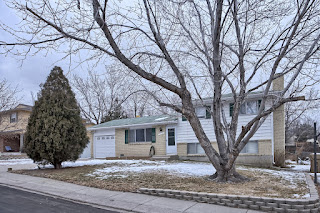
Move In Ready Home For Sale in Colorado Springs

Beautifully Updated Tri-Level Home For Sale in Colorado Springs! Perfect for the First Time Home Buyer looking to Purchase a Home For Sale in Colorado Springs. Boasting 4 Bedrooms, 2 Bathrooms, 1 Car Attached Garage, 2 Car Detached Garage with Power and 1,556 Square Feet. Click Here to Tour This Home for Sale in Colorado Springs. Spacious Living Room that is Open to the Kitchen and Dining Area. The Perfectly Appointed Kitchen has been completely remodeled with New Counters and Cabinetry. All Kitchen Appliances Included! There are 3 Spacious Bedrooms on the Upper Level and a Completely Remodeled Full Bathroom. The Lower Level Boasts a Family Room with a Cozy Fireplace. The Lower Level also features the 4th
Bedroom and 2nd Bathroom. Enjoy Summer BBQ’s in your Expansive Backyard. Tons of Storage and Space in the Detached 2 Car Garage with Power. This Move In Ready Home For Sale in Colorado Springs is Located in a Fantastic Location with Easy Access to Shopping, Parks, Schools, Dining and so much more!

If you are considering Relocating to Colorado Springs, Purchasing a Home for Sale in Colorado Springs, considering Selling a Home in Colorado Springs, or want more information on the Colorado Springs Real Estate Market, Contact your Colorado Springs Real Estate Expert, Mike MacGuire Today! Click Here to Check out my informational video if you are considering Selling a Home in Colorado Springs. Click Here to Check out my informational video if you are considering Purchasing a Home for Sale in Colorado Springs.

Wednesday, February 8, 2012

Where Are Rents Headed?

by The KCM Crew

People are delaying the decision to buy a home because they are not sure where prices are headed. If they buy and prices continue to soften, they feel that they will not have purchased at the optimal moment. They reason that, if they sit and wait, they can’t be hurt. This thinking assumes that a non-decision comes without consequence.

The normal retort to this thinking by people bullish on real estate is that prices may soon turn to the positive or that interest rates will start heading upward. Buy now before the cost of buying increases! Today, we want to look at this from a different angle. We want to alert our readers that their housing expense is about to increase if they continue to rent.

Currently, in most parts of the country, buying is less expensive than renting. Plus, purchasers can lock in their housing expense for the next thirty years by buying now. They will get a sensational price and a record low interest rate. What will happen if they continue to rent?

The Alternative to Buying
If a family continues to rent, they are looking at a housing expense which will rise with the market. Rental costs increase by 3% a year historically. But today’s rental market favors the landlord to a greater degree. Below is a graph of how rental prices have increased recently and where they are projected to go over the next few years based on a report from Marcus & Millichap.


Bottom Line
Hoping to save by delaying the purchase of a home may result in higher housing costs while you’re waiting, thus achieving the exact opposite result. Check with a local real estate professional to determine the best option for you and your family.

If you are considering Relocating to Colorado Springs, Purchasing a Home for Sale in Colorado Springs, considering Selling a Home in Colorado Springs, or want more information on the Colorado Springs Real Estate Market, Contact your Colorado Springs Real Estate Expert, Mike MacGuire Today! Click Here to Check out my informational video if you are considering Selling a Home in Colorado Springs. Click Here to Check out my informational video if you are considering Purchasing a Home for Sale in Colorado Springs.

Monday, February 6, 2012

Is It Time for Young Families to Buy a Home?

by The KCM Crew

We have reported that almost six million adults between the ages of 25 to 34 are currently living with their parents. That number reflects an almost 50% increase since 2003. These young adults are now being advised to jump into homeownership.

Who are the people selling them on the American Dream? Their parents! It seems that parents of some adult children are strongly suggesting that their children take advantage of the low cost of homeownership available today. Some moms and dads are helping financially and are even co-signing for the mortgage. Middle age parents who have owned a home understand its true value. A home has always been a good long term financial investment. However, homeownership also has many other benefits.

In Fannie Mae’s most recent National Housing Survey, they asked the question directly: Is this a major reason to buy a home?

The study broke up the answers into financial and non-financial reasons. The top four reasons and six of the top ten reasons were NON-FINANCIAL. The top four are below:

1. It means having a good place to raise children and provide a good education.
2. You have a physical structure where you and your family feel safe.
3. It allows you to have more space for your family.
4. It gives you control over what you do with your living space (renovations & updates).

Should this surprise us? Aren’t these the same reasons our parents bought their home? Aren’t these the same reasons we purchased our home? These are the same reasons parents have suggested their children buy a home. They want the same things for their grandchildren that they believed to be important for their children.

And today, the cost of homeownership is at all time lows:

J.P. Morgan:

“The numbers on housing have an important message for American families today, and particularly younger families setting out on life’s great adventure: Five years ago, at the peak of the home-buying euphoria, it was emphatically a time to rent. Today, when home ownership is depreciated more than ever before, the numbers tell us it is a time to buy.”

MSNBC.com:

“[S]omeone who plans on staying put for seven years would come out ahead by about $9,000 if they bought a median-priced home rather than being a tenant in a median-priced rental.”


HUD:

“Homes today are more affordable for average families than they have been since 1971. Median-income families today have nearly double the funds needed to purchase the average home.”

Bottom Line

Now that the economy is beginning to show signs of stabilizing, people are getting back to the core values that families have always embraced. Homeownership is definitely high on that list. And today, from a financial standpoint, it may be the opportunity of a lifetime.

If you are considering Relocating to Colorado Springs, Purchasing a Home for Sale in Colorado Springs, considering Selling a Home in Colorado Springs, or want more information on the Colorado Springs Real Estate Market, Contact your Colorado Springs Real Estate Expert, Mike MacGuire Today! Click Here to Check out my informational video if you are considering Selling a Home in Colorado Springs. Click Here to Check out my informational video if you are considering Purchasing a Home for Sale in Colorado Springs.